DIY Robot Kit for Adults – Build Real Robotics Projects with the Right Robotic Components
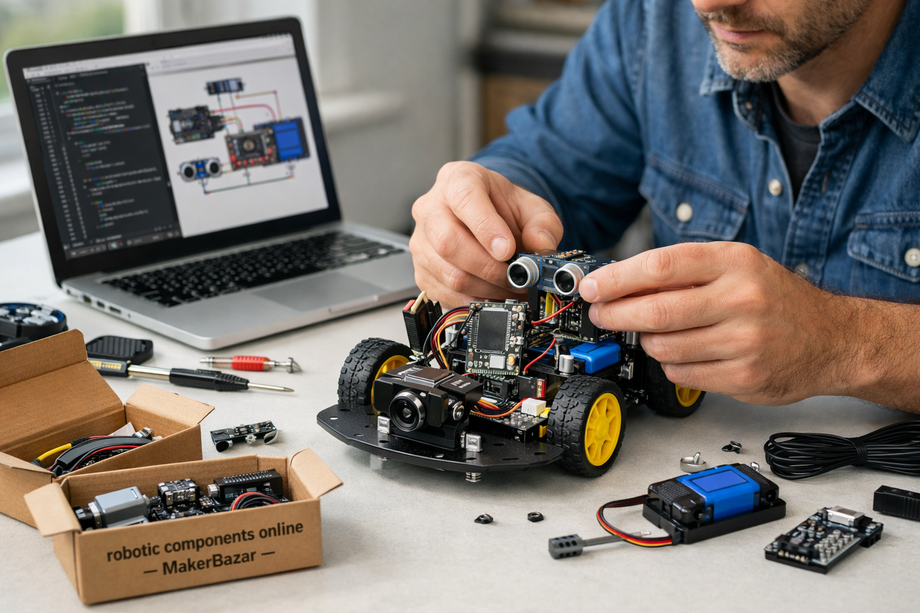
The demand for hands-on robotics learning is no longer limited to students. Today, professionals, makers, freelancers and tech enthusiasts are actively investing in a diy robot kit to upgrade their skills in automation, embedded systems and applied AI.
However, choosing the right kit is not just about motors and wires. A serious DIY robotics setup depends heavily on the quality, compatibility and expandability of its robotic components.
In this guide, MakerBazar helps you understand how to select a professional-grade DIY robot kit for adults and how to build real-world robotics projects using reliable robotic components online.
Why DIY Robot Kits Are Becoming Popular Among Adults
Unlike toy-level robotics products, a modern diy robot kit is designed to simulate real engineering workflows. Adults prefer such kits because they:
-
Allow deep hardware customization
-
Support multiple programming languages
-
Enable integration of advanced sensors and modules
-
Help build industry-relevant robotics projects
For working professionals and serious learners, a DIY robot kit is no longer just a hobby product—it is a learning platform.
The Role of Robotic Components in a DIY Robot Kit
Most people focus only on the base kit, but the true capability of a robot depends on the robotic components you connect to it.
A strong DIY robot kit should allow easy integration of:
-
Microcontrollers and processing boards
-
Motor drivers and encoders
-
Sensors (distance, motion, vision, environmental)
-
Communication modules (Wi-Fi, Bluetooth, LoRa)
-
Power management modules
Without quality robotic components, even an expensive kit cannot deliver reliable performance.
That is why experienced makers prefer purchasing compatible robotic components online from trusted technical marketplaces such as MakerBazar.
Core Hardware You Should Look for in a DIY Robot Kit
When selecting a professional-grade diy robot kit, evaluate the following hardware stack.
1. Controller Board Compatibility
A good kit should support at least one of the following:
-
Arduino based boards for rapid prototyping
-
ESP32 for wireless and IoT robotics
-
Raspberry Pi for vision and AI processing
This flexibility allows you to upgrade your robot without replacing the entire kit.
2. Motor System and Control Modules
Your robot’s movement precision depends on:
-
DC gear motors or stepper motors
-
Motor driver modules
-
Encoders for position feedback
High-quality robotic components improve stability, reduce overheating and allow accurate motion control.
3. Sensor Expansion Support
A professional diy robot kit should support plug-and-play expansion of robotic components such as:
-
Ultrasonic and LiDAR distance sensors
-
IMU and orientation sensors
-
Gas and temperature sensors
-
Camera modules
These robotic components allow you to build advanced robotic behaviours instead of simple obstacle-avoidance.
4. Communication and Networking Modules
For modern automation projects, your robot must communicate with other systems.
This requires robotic components such as:
-
Wi-Fi modules
-
Bluetooth modules
-
MQTT or cloud-ready communication interfaces
When purchasing robotic components online, always check protocol compatibility with your controller.
Advanced Projects You Can Build Using a DIY Robot Kit
If you are serious about robotics, avoid beginner-only projects. A well-designed diy robot kit combined with the right robotic components can be used to build:
● Smart Surveillance Robot
Using camera modules, motion sensors and wireless robotic components for remote monitoring.
● Autonomous Mapping Robot
Using IMU, wheel encoders and distance sensors to perform indoor mapping.
● Voice-Controlled Service Robot
Using microphone modules and cloud integration via Wi-Fi robotic components.
● Smart Warehouse Robot Prototype
Using RFID, path-tracking sensors and wireless robotic components for logistics automation.
These projects help create a strong technical portfolio for engineers and makers.
How MakerBazar Helps You Build Better Robots
MakerBazar is designed for builders who want more than generic kits.
Instead of locking you into fixed configurations, MakerBazar allows you to:
-
Choose a flexible diy robot kit
-
Select compatible and certified robotic components
-
Order reliable robotic components online for upgrades and repairs
This modular approach helps you scale your robot as your learning grows.
How to Choose the Right Robotic Components Online
Before buying robotic components online, follow these practical checks:
-
Verify operating voltage and current ratings
-
Confirm library and firmware support
-
Check interface compatibility (I2C, SPI, UART, PWM)
-
Review documentation and example projects
Professional builders treat robotic components as long-term assets, not disposable accessories.
Who Should Buy a DIY Robot Kit?
A diy robot kit is ideal for:
-
Working professionals upgrading embedded or automation skills
-
Engineering students building industry-ready projects
-
Freelancers developing robotics prototypes
-
Makers building smart devices and automation systems
When combined with high-quality robotic components, a DIY robot kit becomes a complete robotics learning platform.
Final Thoughts
A powerful robot is not created by a single box. It is created by a carefully selected diy robot kit supported by reliable and expandable robotic components.
By choosing the right robotic components online through MakerBazar, you gain control over your hardware, improve project reliability and unlock the freedom to build real-world robotics applications instead of limited demo robots.
If your goal is to build serious robotics projects at home or in your lab, investing in the right components is as important as choosing the kit itself.


Comments
Post a Comment