What Are JST Connectors Used For?
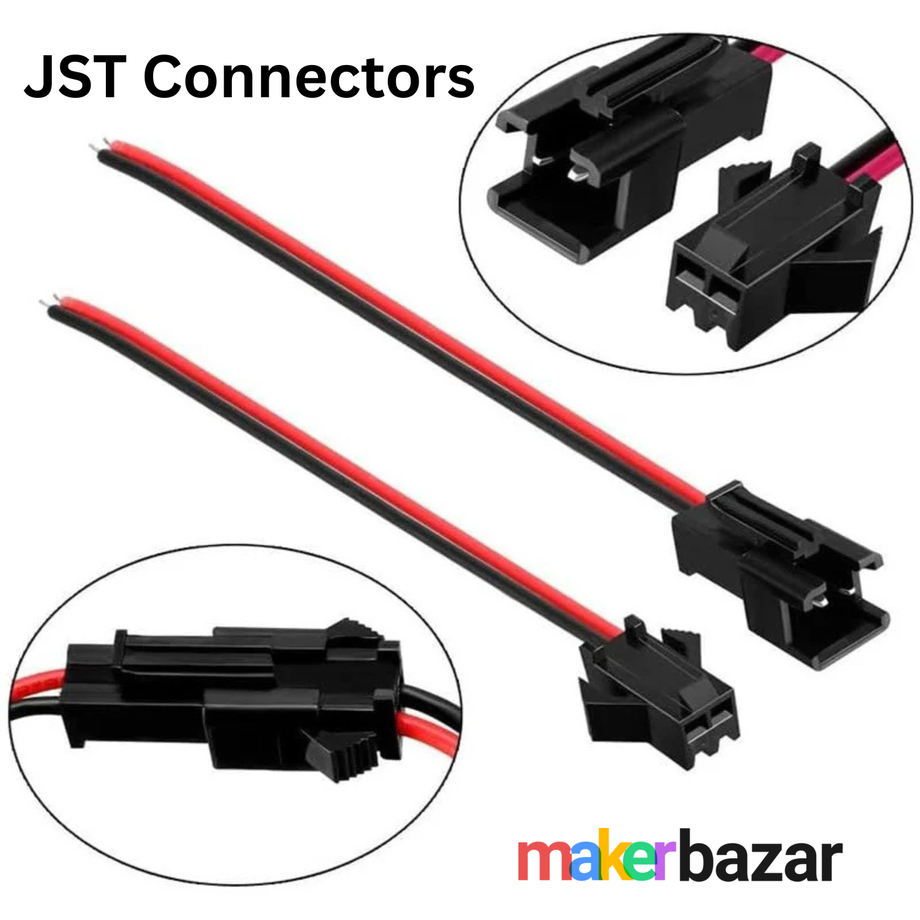
JST connectors are small, reliable electrical connectors commonly used in electronics, robotics, and DIY projects. They are designed to connect wires to circuit boards or components securely, making them ideal for low-voltage and low-current applications.
Common Uses of JST Connectors
1. Battery Connections
JST connectors are widely used to connect lithium-ion and LiPo batteries in devices like drones, RC cars, robots, and portable electronics. They provide a stable and safe power connection.
2. Robotics Projects
In DIY robotics, JST connectors help connect motors, sensors, controllers, and power modules easily. They allow quick assembly and replacement without soldering every time.
3. DIY Electronics & Maker Projects
Makers use JST connectors in Arduino, Raspberry Pi, and IoT projects for clean wiring and modular connections.
4. LED Lighting Systems
JST connectors are commonly used in LED strips, LED panels, and decorative lighting for quick plug-and-play connections.
5. Consumer Electronics
They are found in devices like Bluetooth speakers, toys, small appliances, power banks, and gadgets where compact and reliable connections are needed.
6. Drones & RC Vehicles
Almost all RC and drone electronics use JST connectors for battery power, signal connections, and charging ports.
Why JST Connectors Are So Popular
✔ Compact and lightweight
✔ Secure locking mechanism
✔ Easy to connect and disconnect
✔ Reliable electrical contact
✔ Ideal for low-voltage systems
✔ Widely compatible with DIY boards
Final Words
JST connectors may be small, but they play a big role in making electronics projects clean, safe, and organized. Whether you're building a robot, connecting a battery, wiring LEDs, or working on a DIY gadget, JST connectors make your work easier and more professional.
If you're working on electronics or robotics projects, JST connectors are a must-have component in your toolkit.


Comments
Post a Comment